
Thoughts & Experiences
A collection of my personal reflections, career journeys, and experiences beyond the world of tech.
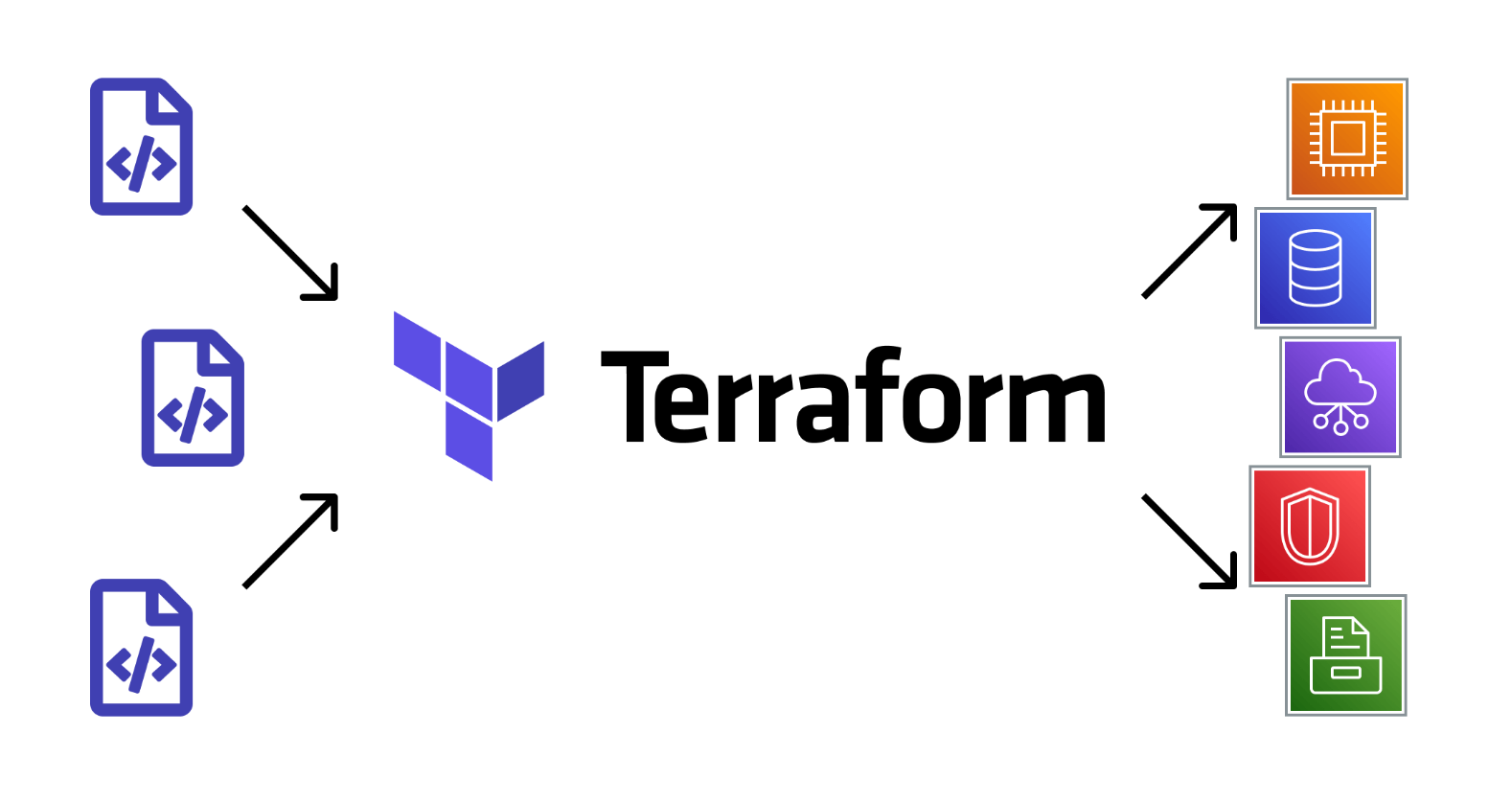
Terraform State Lock: A Common CI/CD Pipeline Challenge and How to Resolve It
Terraform uses state locking to prevent multiple operations from modifying the same state file simultaneously.
Why I should care about a Rate Limiter?
your system need a rate limiter– To prevent the DDoS attacks,– reduce costs,– error handling – it prevents DDoS attachs – distributed denial-of-service attempts.– limits unnecessary strain on computing resources, saving infrastructure spend.– it avoid overloading on our workload – ensures our happy users don’t accidentally or maliciously hog resources and ruin the experience for […]
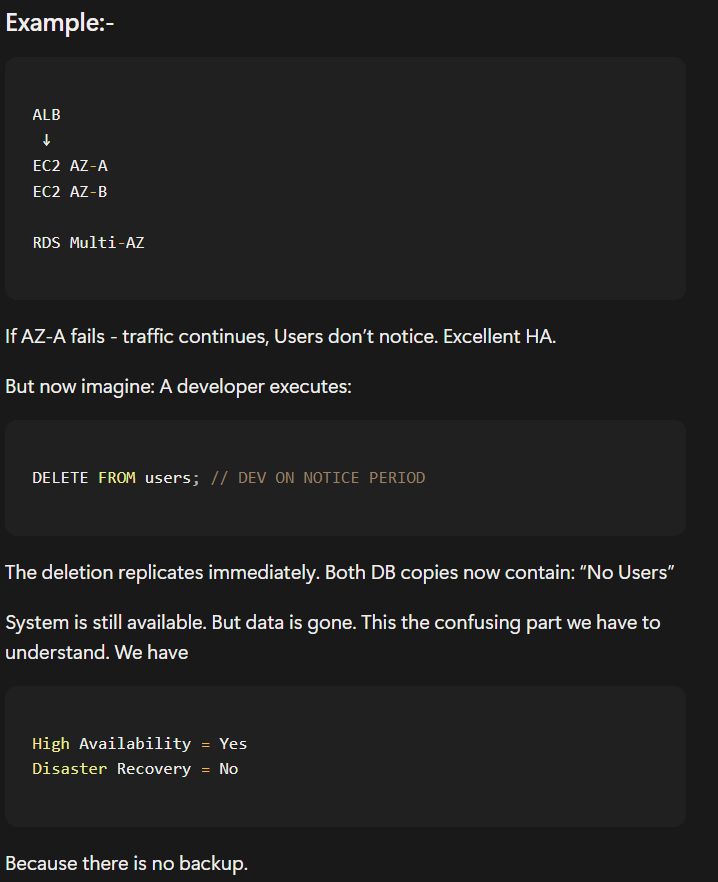
Mistake we have to AVOID:
“Many engineer think – If my system is highly available, then I have disaster recovery.” Not necessarily. A system can be highly available and still have poor disaster recovery.
JavaScript – Coercion
A massive misconception among developers is that == checks for value equality while === checks for value and type equality. The accurate explanation is that == allows coercion in the equality comparison and === disallows coercion’

The crutches of your comfort zone
The crutches of your comfort zone may help you walk today, but they are the biggest enemy of your growth.
Serverless is not free — it’s a different kind of cost
Everyone sells serverless as ‘pay only for what you use’. But nobody talks about the cognitive overhead: cold starts, DLQ monitoring, distributed tracing across 10 Lambdas, and the fact that debugging is a completely different discipline. The cost moved from infra bills to engineering hours.
RxJS is still misunderstood after all these years
Most Angular developers I have mentored treat RxJS like a fancy callback. The shift to thinking in streams — composing, transforming, and timing data flows — takes months. But once it clicks, it changes how you design the entire state layer of an application.
interface vs. types in TS
The main concept interfaces offer over types is declaration merging. On the other side, types can do a lot more than interfaces (mapped types, conditional types, etc)
Monorepos are an organisational decision, not a technical one
You do not adopt Nx because it is cool. You adopt it when the pain of coordinating shared libraries across separate repos outweighs the simplicity of isolation. The tooling is good, but the real win is making team boundaries explicit through code structure.
Infrastructure-as-Code is a contract
When I write a CDK stack, I am not just provisioning resources. I am writing a contract: this is what the system looks like, reproducibly, forever. Drift from that contract is technical debt with real operational consequences. Treat it like application code — review it, test it, version it.
The best architecture decisions happen in boring meetings
Not in design docs or ADRs (though those matter). The real decisions happen in a 30-minute Slack call where someone says ‘should we really add another service for this?’ and the team actually stops to think. Slow down those conversations. They are cheaper than the refactor later.
Running 200 TPS on Lambda for an hour and learning humility
We load-tested our middleware at 200 transactions per second for a full hour. Lambda held. But the SQS queue depth graph looked like a heartbeat monitor, and I spent three hours convinced we had a bug. It was just auto-scaling warming up. Observability without context is noise.
Converting SOAP to JSON at the government’s pace
Legacy government systems speak SOAP. Modern microservices speak JSON. Building the translator layer in between — with WAF, private API Gateway, and Route 53 inbound resolvers — was the most unglamorous, most impactful work I have ever done. Nobody sees the middleware until it breaks.
What DLQs taught me about trust
The first time a dead-letter queue caught a batch of 3,000 failed messages in production, I felt sick. Then I realised: this is the system working. The DLQ is proof that we planned for failure. Reliability is not the absence of errors — it is knowing where they go.
Playwright + Python: bridging two worlds
Writing E2E tests for a TypeScript frontend using Python felt wrong at first. But the QA team owned Python, and the goal was automation, not purity. Two weeks in, we had 60% regression coverage on critical flows. Pragmatism beats elegance when deadlines are real.
The Teams webhook that became the most important endpoint
We built a Lambda that posts CloudWatch alarm summaries to a Teams channel. Took half a day. It became the first thing the on-call engineer checks in the morning. Sometimes the highest-ROI engineering is a webhook and a well-formatted message.
At what scale does serverless stop being the right answer?
I keep telling teams that serverless is good for bursty, unpredictable workloads. But where is the real inflection point? At 10,000 RPS? At sustained constant load? I have heard very different answers from very credible people and I still do not have mine.
How do you actually measure ‘code quality’?
Code coverage? Cyclomatic complexity? Pull request review time? I have used all of these. None of them capture the thing I actually care about: can a new engineer understand and safely modify this code in six months? I am still looking for a metric that gets close.
Is event-driven architecture making distributed systems harder to reason about?
EventBridge gives you beautiful decoupling. But ‘who published this event and why did it trigger that Lambda?’ becomes genuinely hard to answer in a post-mortem. I wonder if we are solving coupling by creating complexity of a different kind.
What does ‘senior’ actually mean in engineering?
I have seen senior engineers who write brilliant code but cannot bring a junior along. And I have seen others who write mediocre code but ship teams that consistently deliver. Which one is more valuable? I think I know the answer, but it makes me uncomfortable.
Will AI write the boilerplate, or will it write the architecture?
Right now AI is great at plumbing — CRUD endpoints, test scaffolding, repetitive config. But the hard decisions — what to build, how services should talk, what to NOT build — still feel very human. I wonder how long that distinction holds.

Demon or Revolutionary?
A thought keeps returning to my mind— a quiet conflict that refuses to settle. If today you were to place a revolver in my hand, perhaps it would awaken a demon within me. But if that same revolver had been given to me before 1947, it might not have awakened a demon, but instead given […]

The Pen Was Always in Our Hands
Maybe destiny was never written. Maybe we are writing it. For generations people have said that everything in life is already written. In India we grow up hearing the phrase: “jo likha hai, wo hoga” — what is written will happen. The idea is comforting.It suggests that somewhere, beyond our understanding, life follows a script […]